Call Now for Plumbing, Drain & Water Cleanup Services
From plumbing emergencies and clogged drains to water damage and sewage cleanup, PipePro is ready to respond day or night—24/7.

Plumbing Help During a Plumbing Emergency
Step-by-step actions to take during a plumbing emergency to minimize damage and stay safe.
In a plumbing emergency, quick actions can prevent costly damage.
Shut Off
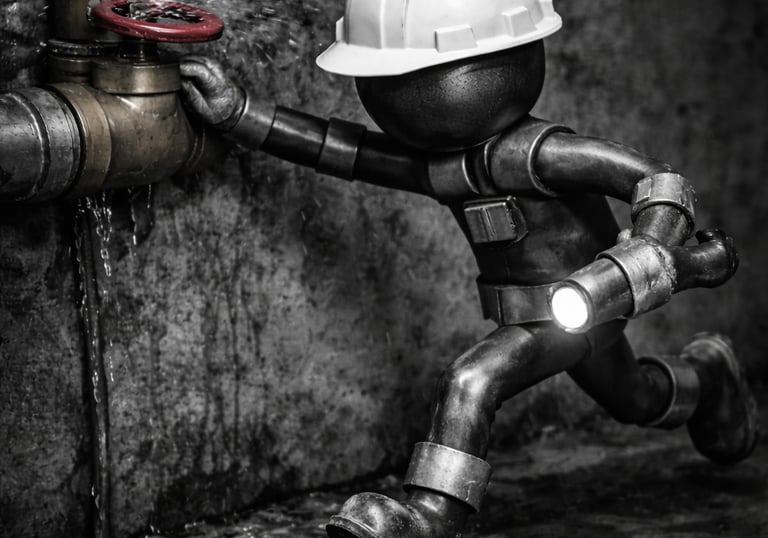
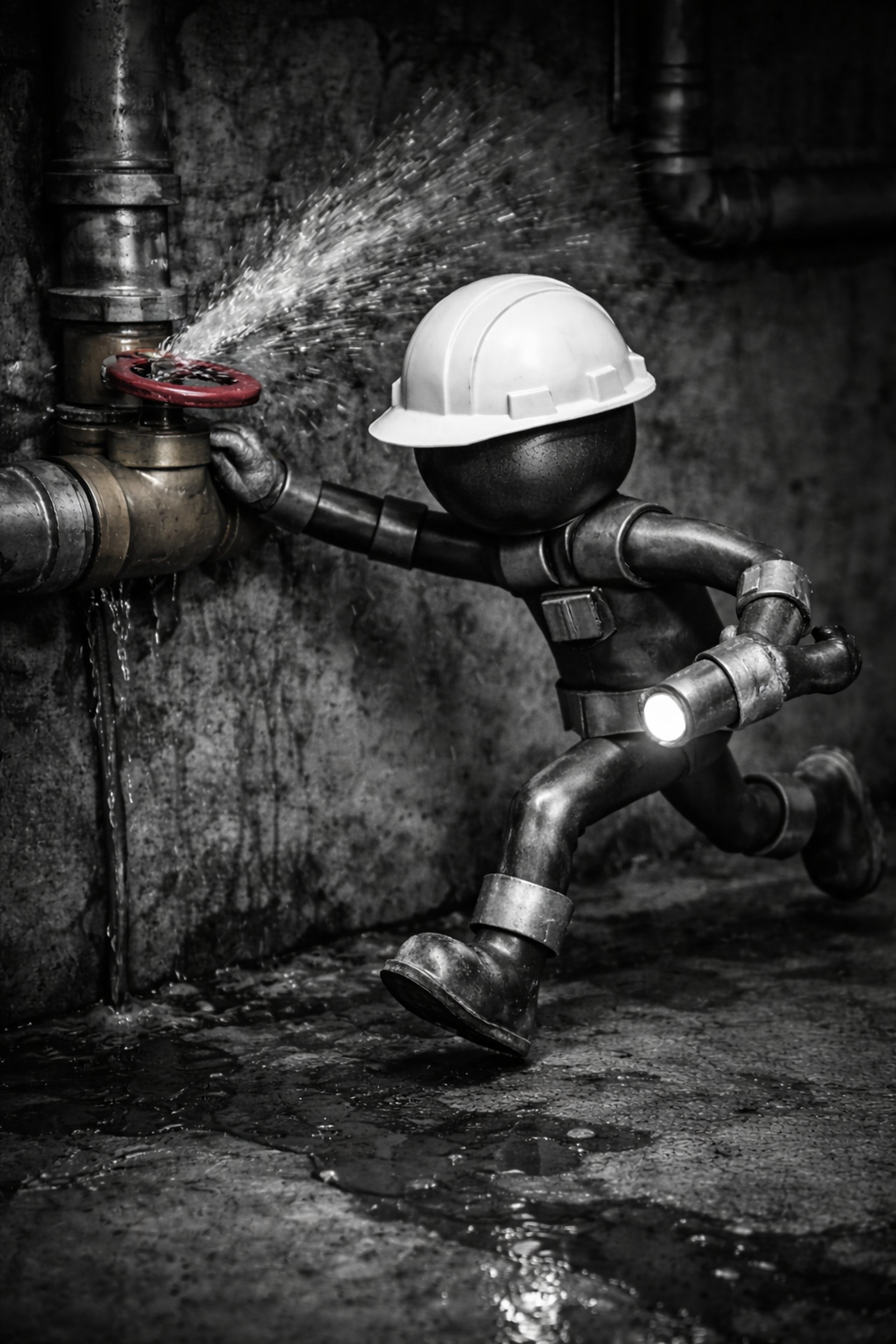
To effectively stop flooding in your home, the very first step you should take is to turn off the water nearest to the fixture that is causing the problem. If you find that this initial measure doesn’t work, the next step would be to locate your main water valve for your property. Not sure where it might be? Here are some helpful tips—if you live in a slab home or have a crawlspace, it’s highly likely that the valve is situated near your water heater, typically within about 20 inches of the floor level. In cases where your home has a basement and it's finished, check inside the utility room; it is common for the main water line to enter the house around waist height. If you don’t find the valve in these areas, you should look for a trap door in the finished area. Contractors often build access panels around such mechanisms. If you still can’t locate the valve after checking these areas, do not hesitate to call your local water company or the fire department for assistance, as they can help shut it off at the curb. It’s crucial to remember that if there’s standing water in the basement, you should absolutely avoid entering it; doing so could result in hazardous conditions such as electrocution. Additionally, if you notice water coming through the ceiling, it is vital to avoid turning on any lights or plugging in any electrical devices, as this could pose serious safety risks.
Clear Drains
If it is safe to access the area and you have verified that there is no electrical current in the water, inspect the drain for any obstructions that can be easily removed. Common items such as socks, toys, and other debris have been known to fall into basement drains. If no blockage is detected, contact us, as the most reliable course of action is to snake the line. In the interim, discontinue water usage to prevent exacerbating the issue. If the blockage is located in the mainline, any water used will continue to accumulate in the basement. Additionally, assess the surrounding area for any objects that could hinder drainage. Always avoid using harsh chemicals within your plumbing, as they can not only damage pipes but also pose health hazards and environmental risks. Instead, consider using safer, more eco-friendly alternatives to unclog your drains. Taking the time to do things right will save you hassle and potential costly repairs in the future.
Call Help
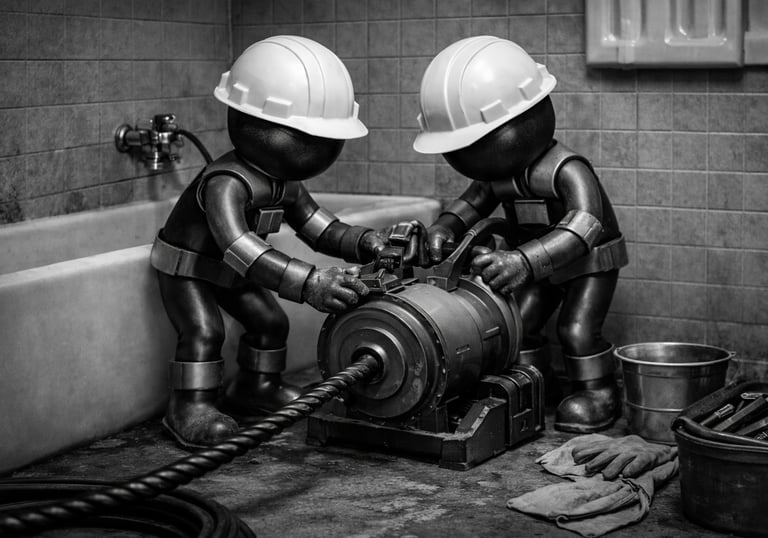
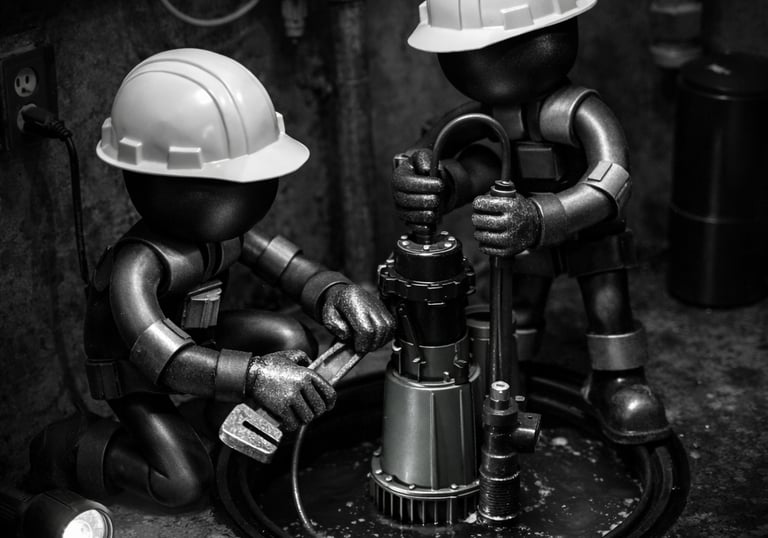
Before embarking on this job as a DIY, please keep in mind that whether drain cleaning or water mitigation, both of these types of work require heavy training and either one can carry lasting consequences when done incorrectly. The drain machine we use can very easily injure you if you bind up in the line, and water left in the home can result in microbial growth being both detrimental to your home, but also your health. It is important to understand that these tasks are not just about the physical act of cleaning, but also about the potential hazards and the long-term implications of your actions. We would highly recommend the use of professionals in both of these categories for safety reasons, as they possess the expertise and equipment to handle such significant issues effectively and safely. If you find yourself considering these tasks, it may also be wise to consult with a licensed expert before proceeding further, as they can offer insights that could save you from costly mistakes and ensure the integrity of your home is maintained.
Act Fast
What is a plumbing emergency?
A sudden leak or burst pipe causing significant water damage can be quite alarming. Any water going anywhere that it shouldn't be can lead to serious complications and costly repairs. It is crucial to address these issues promptly to prevent further damage and ensure the safety of the premises. Homeowners and property managers should always be vigilant in monitoring for signs of leaks and be prepared to take immediate action if necessary.
What should I do first?
Turn off the shut off valve nearest the fixture or the main water valve to stop flooding immediately. This quick action can prevent further damage and protect your home from the consequences of excess water. If you are unsure about the location of the valves, take a moment to familiarize yourself with them before an emergency arises, as knowing exactly where to go can save crucial time in urgent situations.If you ever find yourself in a situation where you don’t know what to do, calling the fire department is always an option, as they can shut off the water at the street.
How do I find the main water valve?
Check near your water meter, basement, or where the main line enters your home. If you don’t have a basement, it’s often located near the water heater. Additionally, consider reviewing the areas surrounding these points, such as the utility room or even outside near the foundation of your house. Ensuring you have inspected these areas thoroughly ahead of time to locate the main valve can save you from potential water damage and costly repairs in the future.
When should I call a plumber?
I know people like to try fixing things themselves, but tackling plumbing issues might be a bad idea. Many of the worst floods I’ve seen happened when someone attempted a repair and it went wrong. It’s best to call for help right after shutting off the water to prevent further damage. Also, if your insurance is going to be involved due to damage, they will need an invoice from the plumber.
If Im Working With My Insurance, Why Wont They Cover the Plumbing?
Great question. An insurance policy covers the damages caused by a covered peril, but not the peril itself. In simple terms, this means they cover repairs for what the cause of loss damages (like walls or floors from plumbing issues), but not the plumbing itself since it caused the damage. One exception is when the plumbing failure isn’t due to normal wear and tear, such as freezing. In that case, you can submit the invoice to the carrier for reimbursement.
What is the PipePro Plan? Is it worth buying?
Nope! Just like most of our competition, we’ll come out to your home and evaluate the issue. While we’d certainly appreciate the chance to do the work, it’s completely up to you. We always strive to stay competitive in the market and believe you’ll be impressed with our technicians and their professionalism.
Does PipePro Charge a Service call?
Our PipePro Plan is a fantastic choice for everyone. Since we’re an emergency plumber, most of our calls are urgent. For just $135.00 a year, you’ll get priority service whenever you call, a 5% discount on each service visit (up to $50), and one gallon of our ProClean Chemical treatment. This plan easily pays for itself in just two visits.
Q&A
FAQs
What does a water heater cost?
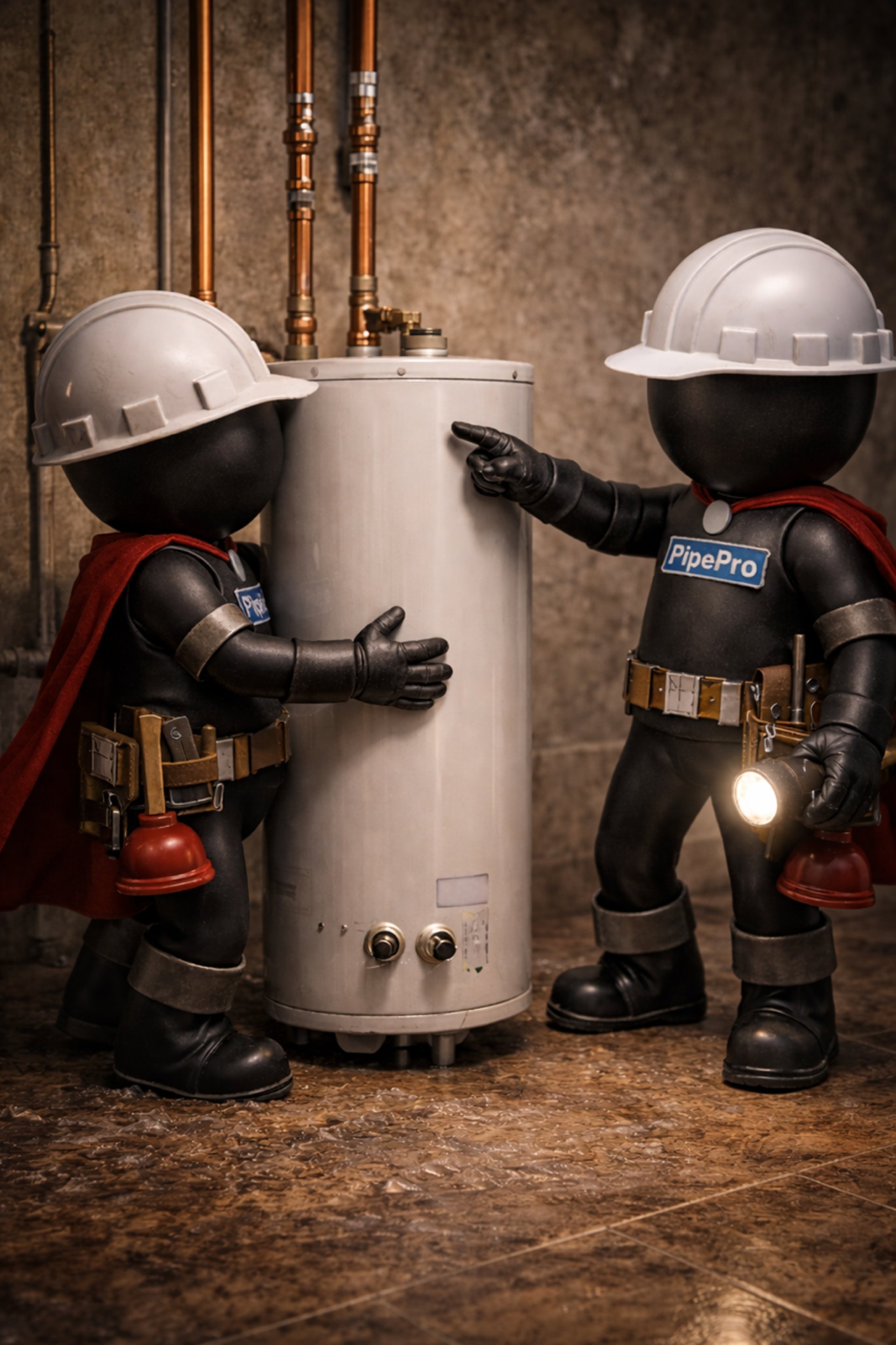
Well, that’s a bit tricky. Some companies advertise water heaters for $1,000–$1,500, but that’s rarely the whole story. They’ll often try to upsell you during the visit, and certain required items aren’t included in that price. All in, you’re probably looking at $2,000–$2,800 for a standard tank, depending on what’s needed to meet code. No matter who you choose, it’ll likely fall within that range. With PipePro, for a standard water heater install during regular hours, our price is on the lower end and likely a good percentage cheaper than the competition.
What does a sump pump cost?
Sump pumps come in different sizes, and it’s common to see ones that are too small installed in homes. Prices can range from $900 to $1,400, depending on the home’s specific needs. Most companies charge $1,200 to $1,400 for a 1/3 hp pump, but my price for the same size is significantly lower. We also install a high-quality pump from a top manufacture that we trust will last for many years.
How much is it to stop a dripping faucet?
This is a tricky question because there are so many brands, each with its own specific parts. While labor usually takes about 1 to 1.5 hours, parts alone can cost anywhere from $150 to $200. In most cases, I’d still recommend replacing the fixture, as the combined cost of labor and parts is often similar to a full replacement. This doesn’t apply to shower valves, though, since they’re more complex repairs that require permits in most areas.
How much do disposals cost?
Similar to sumps, disposals are marketed based on both size and level of luxury, with the latter referring to enhanced insulation that reduces operational noise. Pricing can vary significantly, with some units costing around $500 and others reaching as high as $800. At PipePro, our offerings will likely fall within the lower mid-range segment, providing a balanced combination of quality, performance, and value.
How much is it to snake a main drain (lateral)
For services of this nature, we charge a flat rate, ensuring that the price remains the same whether the work takes one hour or three. Based on the specific requirements of your project, costs typically range from $350 to $650. What sets PipePro apart from many other companies today is our commitment to proper drain cleaning, in contrast to the industry trend of using drains as an opportunity to push higher-margin excavations. We prioritize thorough and effective cleaning, and in the event that excavation is necessary, we would refer you to a trusted third-party provider. You can have full confidence that there will be no high pressure upselling for a service you likely do not need.
Help Now
Call immediately if your pipes burst or leak.